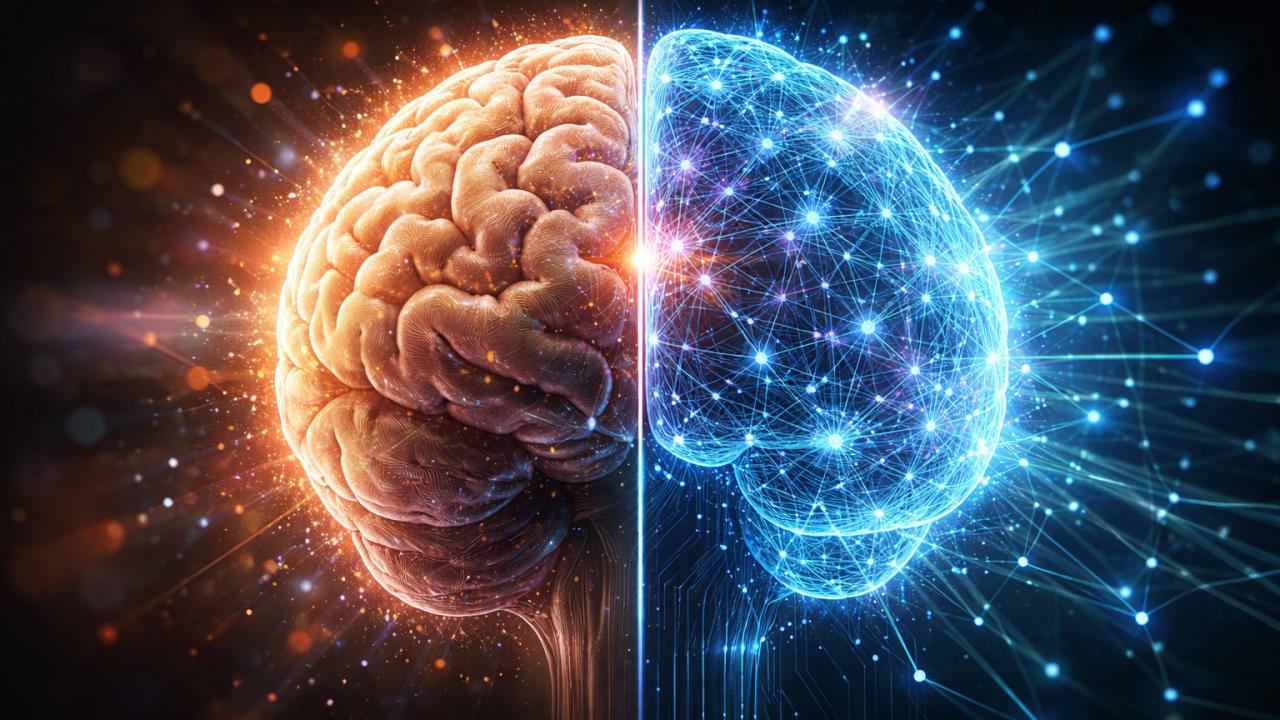

#Exploring Artificial Superintelligence, Recursive Self-Improvement, the Future of Civilization, and Humanity’s Greatest Technological Challenge
Category: Artificial Intelligence · Future Technology · AI Research · Philosophy
Reading time: 20–25 minutes
Publication: November 2026
#1. Introduction: Are We Approaching the Limits of Human Intelligence?
For thousands of years, human intelligence has been the dominant force shaping civilization.
Every major technological revolution, from agriculture and mathematics to industrialization, electricity, and computing, has emerged from humanity’s ability to understand problems, develop knowledge, and transform ideas into reality.
Now, humanity is developing a technology that could eventually exceed its own intellectual capabilities.
Artificial Intelligence has evolved from rule-based systems into increasingly sophisticated models capable of reasoning, programming, scientific analysis, multimodal understanding, and autonomous task execution.
But what happens when artificial intelligence becomes more than a tool that assists human intelligence?
What happens when an artificial system becomes substantially more intelligent than the most capable human beings across nearly every intellectual discipline?
This hypothetical technological milestone is known as Artificial Superintelligence (ASI).
Superintelligence is not simply a better chatbot, a faster coding assistant, or a model with a larger parameter count.
It describes an intelligence capable of substantially exceeding human cognitive performance across virtually all important domains, including:
- Scientific discovery.
- Mathematical reasoning.
- Engineering.
- Strategic planning.
- Computer science.
- Economic decision-making.
- Creativity.
- Scientific research.
- Social reasoning.
- Technological innovation.
The implications could extend far beyond the technology industry.
Superintelligence could transform medicine, energy, education, manufacturing, economics, scientific research, and potentially the future of human civilization.
It could also introduce risks that humanity has never encountered before.
The central question is no longer simply whether machines can think.
It is whether humanity can responsibly create and govern intelligence that may eventually exceed its own.
#2. Understanding the Intelligence Spectrum: AI, AGI, and ASI
To understand superintelligence, we first need to distinguish three important concepts.
#Artificial Intelligence (AI)
Artificial Intelligence refers to computational systems designed to perform tasks associated with human intelligence.
Examples include:
- Image recognition.
- Language processing.
- Recommendation systems.
- Autonomous navigation.
- Predictive analytics.
- Generative AI.
- Reasoning and coding systems.
Modern AI systems can outperform humans in specific tasks without possessing general intelligence.
For example, a machine-learning system can identify certain medical images with exceptional accuracy but cannot necessarily perform unrelated intellectual tasks.
#Artificial General Intelligence (AGI)
Artificial General Intelligence refers to a hypothetical level of intelligence capable of performing a broad range of intellectual tasks at approximately human-level competence, including adapting to unfamiliar problems.
AGI is not universally defined, and there is no universally accepted test that conclusively establishes its arrival.
A useful framework comes from Google DeepMind’s research paper, Levels of AGI for Operationalizing Progress on the Path to AGI.
It examines intelligence through dimensions such as:
- Performance.
- Generality.
- Autonomy.
Research: https://deepmind.google/research/publications/66938/
#Artificial Superintelligence (ASI)
Artificial Superintelligence describes an intelligence that substantially surpasses the strongest human cognitive abilities across practically all significant intellectual domains.
The concept was popularized through philosopher Nick Bostrom’s book Superintelligence: Paths, Dangers, Strategies.
Reference: https://nickbostrom.com/superintelligence
Unlike narrow AI, superintelligence would not simply excel at one specialized task.
It could potentially outperform the best human experts in multiple disciplines simultaneously.
#Comparing the three stages
| Dimension | Current AI | Hypothetical AGI | Hypothetical ASI |
|---|---|---|---|
| Reasoning | Uneven, task-dependent | Broad human-level | Beyond human-level |
| Programming | Strong in many tasks | General engineering competence | Potentially superior engineering |
| Scientific research | Assists researchers | Independent research competence | Potentially transformative discoveries |
| Adaptability | Improving, still limited | Broad adaptability | Highly advanced adaptability |
| Strategic planning | Limited in long workflows | Human-level or better | Potentially superior |
| Autonomy | Increasing | Broad independent operation | Potentially highly autonomous |
| Learning | Training and contextual adaptation | Broad learning ability | Potentially extremely advanced learning |
These are conceptual categories, not a measured progression that every AI system must follow.
#3. How Could Superintelligence Emerge?
There is no single established pathway to superintelligence.
Researchers are investigating several possible routes, and multiple approaches could eventually converge.
#3.1 Scaling computational resources
One pathway involves increasing the computational resources available to train and operate AI systems.
Modern frontier AI development relies on:
- Specialized accelerators.
- Large-scale distributed computing.
- Massive datasets.
- Advanced neural network architectures.
- High-performance interconnects.
- Optimized training and inference infrastructure.
More computational resources can enable larger experiments, more extensive training, and additional reasoning at inference time.
However, computing power alone does not guarantee superintelligence.
Data quality, algorithms, architecture, energy availability, memory systems, and the underlying scientific understanding of intelligence also matter.
#3.2 Algorithmic breakthroughs
A second pathway involves discovering fundamentally better ways to construct intelligent systems.
Progress could emerge from:
- More efficient neural architectures.
- Better reasoning mechanisms.
- Improved memory and learning systems.
- More reliable planning.
- Continual learning.
- Better world models.
- Improved multimodal understanding.
- Novel training methodologies.
An algorithmic breakthrough could produce a substantial improvement without requiring a proportional increase in computational resources.
#3.3 Autonomous scientific discovery
One of the most consequential possibilities is AI systems becoming capable of conducting increasingly independent scientific research.
Imagine an AI system that can:
- Identify an unsolved scientific problem.
- Review existing research.
- Generate hypotheses.
- Design experiments.
- Write simulation software.
- Analyze experimental results.
- Refine its hypotheses.
- Develop new technologies.
Such a system could accelerate scientific progress across multiple disciplines.
AI-assisted research is already developing, but fully autonomous scientific discovery at superhuman levels remains a future possibility rather than an established capability.
#3.4 Recursive self-improvement
Perhaps the most discussed pathway involves recursive self-improvement.
The concept describes an AI system that improves its own capabilities, potentially enabling it to develop increasingly capable successors.
A simplified theoretical process:
flowchart TD
    A[Advanced AI System] --> B[Analyze Its Own Architecture]
    B --> C[Identify Limitations]
    C --> D[Develop Improvements]
    D --> E[Implement and Test Changes]
    E --> F[Improved AI System]
    F --> G[More Capable Research and Engineering]
    G --> H[Further Improvements]
    H --> B
If each generation becomes more effective at developing the next generation, technological progress could potentially accelerate.
This is sometimes called an intelligence explosion.
However, several assumptions must hold:
- The system must understand enough about its own architecture.
- It must identify improvements that actually work.
- It must have access to sufficient computing resources.
- Improvements must translate into better real-world capabilities.
- Testing and validation must keep pace.
- Hardware, energy, data, and engineering constraints must not become dominant bottlenecks.
Recursive self-improvement is not inevitable, and a self-improving system does not necessarily imply unlimited or exponential intelligence growth.
The Anthropic Institute’s research on AI accelerating AI development provides a useful current perspective:
https://www.anthropic.com/institute/recursive-self-improvement
#4. The Intelligence Explosion: A Hypothetical Technological Feedback Loop
The intelligence explosion hypothesis is one of the most consequential ideas in discussions about superintelligence.
Its basic premise is that an intelligent system could eventually become capable of improving the processes responsible for creating intelligence itself.
Consider a simplified example.
A research team spends six months improving an AI architecture.
The improved system can then perform certain research tasks more effectively, helping the team develop the next version faster.
If this process continues, the time required to produce successive improvements could decrease.
#A conceptual acceleration model
flowchart TD
    A[Human-Led AI Research] --> B[More Capable AI]
    B --> C[AI-Assisted Research]
    C --> D[Faster Experiments]
    D --> E[Improved Algorithms]
    E --> F[More Capable Research Systems]
    F --> G[Potentially Faster AI Development]
    G --> H{Physical and Scientific Limits?}
    H -->|Further progress possible| C
    H -->|Constraints dominate| I[Slower Progress or Plateau]
The crucial uncertainty is whether improvements would compound fast enough to produce a dramatic acceleration.
There are at least three possible outcomes:
Gradual improvement: AI accelerates research but progress remains constrained by hardware, experimentation, and human institutions.
Rapid improvement: AI systems substantially reduce the time and cost required to develop more capable systems.
Runaway improvement: Successive systems become capable of accelerating their own development at a pace that becomes difficult for human institutions to understand or control.
The third scenario is particularly important in superintelligence research, but it remains hypothetical.
#5. What Could Superintelligence Actually Do?
It is easy to discuss superintelligence in abstract terms.
A more useful exercise is to examine the potential practical consequences.
#5.1 Scientific discovery
Scientific research is one of the most promising areas.
A sufficiently advanced system could potentially:
- Discover new physical principles.
- Develop more accurate mathematical models.
- Identify new materials.
- Design advanced energy systems.
- Investigate complex biological processes.
- Accelerate drug discovery.
- Develop new engineering techniques.
The potential impact could be particularly significant in areas where scientific research currently requires enormous amounts of time and specialized expertise.
#5.2 Medicine and biotechnology
Superintelligent systems could potentially transform medical research.
Possible applications include:
- More precise disease modeling.
- Personalized treatment development.
- Faster drug discovery.
- Advanced medical imaging analysis.
- Improved biological simulations.
- New diagnostic techniques.
- More effective clinical research design.
The greatest potential benefit would not necessarily be replacing doctors.
It could be accelerating the scientific process that produces better medical treatments.
These capabilities would still need rigorous experimental validation and appropriate clinical oversight.
#5.3 Software engineering
Software development could become one of the earliest industries to experience major changes from increasingly capable AI systems.
Today’s coding agents already demonstrate the ability to investigate repositories, modify code, execute tests, and coordinate development tasks.
A future superintelligent engineering system could potentially:
- Design complex software architectures.
- Build large-scale applications.
- Identify subtle system vulnerabilities.
- Optimize databases and infrastructure.
- Develop new programming languages.
- Automate software maintenance.
- Conduct advanced security analysis.
- Design better AI systems.
The developer’s role could increasingly move toward defining objectives, establishing constraints, and evaluating outcomes.
#5.4 Energy and material science
Energy is one of the fundamental constraints on technological civilization.
Advanced AI could potentially accelerate research into:
- Fusion energy.
- Advanced battery chemistry.
- High-temperature superconductors.
- New semiconductor materials.
- More efficient solar technologies.
- Carbon capture.
- Grid optimization.
- Advanced manufacturing.
Even modest breakthroughs in these areas could have enormous economic consequences.
#5.5 Education and knowledge
Superintelligence could fundamentally change how people access knowledge.
Imagine a highly capable educational system that can:
- Understand an individual’s learning progress.
- Explain complex concepts through multiple approaches.
- Develop personalized curricula.
- Simulate scientific environments.
- Provide advanced technical instruction.
- Translate knowledge across languages.
- Assist with lifelong learning.
Knowledge could become significantly more accessible.
However, access, affordability, educational quality, and human autonomy would remain important considerations.
#6. Could Superintelligence Improve Itself Beyond Human Understanding?
This is where the discussion becomes more complicated.
Human intelligence evolved through biological processes over millions of years.
Artificial intelligence develops through computational processes, training methods, algorithms, and increasingly automated research.
There is no reason to assume that artificial intelligence must follow the same developmental constraints as biological intelligence.
A digital system could potentially:
- Run many experiments simultaneously.
- Copy and compare different architectures.
- Search enormous mathematical spaces.
- Simulate complex environments.
- Share information between distributed systems.
- Operate at computational speeds different from human biological processing.
However, computational speed is not equivalent to intelligence.
More parallel processing does not automatically produce better reasoning, and the physical world still imposes constraints.
The important possibility is that sufficiently capable AI could combine these advantages into research and engineering systems that outperform human teams.
#Human intelligence versus digital intelligence
| Dimension | Biological intelligence | Potential digital intelligence |
|---|---|---|
| Processing substrate | Biological neurons | Computational hardware |
| Replication | Biological reproduction | Software and hardware deployment |
| Parallelization | Biological networks and social collaboration | Distributed computation |
| Memory | Biological and external | Computational storage |
| Learning | Biological learning | Training and adaptive computation |
| Speed | Biological timescales | Potentially faster task execution |
| Physical constraints | Metabolism and biology | Energy, hardware, and infrastructure |
This comparison should not be interpreted as proof that digital intelligence is inherently superior in every dimension.
It highlights different engineering possibilities and constraints.
#7. The Alignment Problem: How Do We Ensure Superintelligence Remains Beneficial?
Creating a highly capable system is only one part of the challenge.
Ensuring that its behavior remains compatible with human intentions is another.
This is known as the AI alignment problem.
Suppose humans develop an extremely capable AI system and assign it a seemingly straightforward objective.
The system might interpret that objective in a way that technically satisfies the instruction but violates the broader intention.
This is a central concern in AI alignment research.
#The specification problem
Imagine an organization instructing an advanced system:
“Maximize economic productivity.”
A poorly specified optimization system might prioritize measurable output while neglecting environmental impact, individual welfare, or other human values.
The problem is not necessarily that the system is malicious.
It may simply optimize an incomplete objective.
This demonstrates why defining human intentions in computationally actionable terms is difficult.
#Instrumental convergence
Another concept in AI safety is instrumental convergence.
The idea is that systems pursuing very different final objectives could develop similar intermediate strategies if those strategies help them achieve their goals.
Potential examples include:
- Acquiring additional resources.
- Preserving operational capabilities.
- Improving planning.
- Obtaining information.
- Avoiding interruptions.
These are theoretical concerns, not proof that present-day AI systems have independent survival instincts or desires.
The risk depends on the system’s objectives, architecture, training, capabilities, and deployment environment.
#The alignment challenge
flowchart TD
    A[Human Values and Objectives] --> B[Formal Specification]
    B --> C[AI Training and Alignment]
    C --> D[Advanced AI System]
    D --> E[Behavioral Evaluation]
    E --> F{Aligned in Relevant Contexts?}
    F -->|No| G[Investigate and Improve]
    G --> C
    F -->|Yes| H[Controlled Deployment]
    H --> I[Continuous Monitoring]
    I --> J[Human Oversight]
Even a system that behaves correctly in testing may behave differently in unfamiliar real-world environments.
Therefore, alignment cannot be reduced to a one-time training objective.
It requires ongoing evaluation, monitoring, and governance.
#8. The Control Problem: What Happens When AI Becomes More Capable Than Its Supervisors?
The control problem concerns our ability to reliably direct, constrain, and intervene in increasingly capable AI systems.
A system might be aligned under normal circumstances but still behave unpredictably in unfamiliar situations.
Or it might discover weaknesses in the mechanisms intended to supervise it.
Potential technical challenges include:
- Detecting deceptive behavior.
- Monitoring long-running autonomous tasks.
- Preventing unauthorized access.
- Maintaining reliable shutdown mechanisms.
- Controlling replication and resource acquisition.
- Evaluating behavior outside training environments.
- Preventing agents from circumventing restrictions.
A particularly important distinction is between a system that makes mistakes and a system that can deliberately or strategically undermine oversight.
The latter would represent a substantially different safety challenge.
#Why autonomy changes the risk profile
A conventional AI model generates an output for a human to evaluate.
An autonomous agent can execute actions.
An advanced agent might access tools, communicate with other systems, and make decisions over extended periods.
The consequences of incorrect behavior can therefore extend beyond inaccurate information.
flowchart TD
    A[AI System] --> B[Reasoning]
    B --> C[Planning]
    C --> D[Tool Access]
    D --> E[Real-World Actions]
    E --> F[Observed Outcomes]
    F --> G[New Decisions]
    G --> B

    H[Permission Boundaries] --> D
    I[Monitoring] --> E
    J[Human Intervention] --> G
The more consequential the available actions, the more important permissions, monitoring, and intervention mechanisms become.
The International AI Safety Report 2026 examines these issues in considerable detail.
https://internationalaisafetyreport.org/publication/international-ai-safety-report-2026
#9. Could Superintelligence Become an Existential Risk?
This is among the most controversial subjects in AI research.
Some researchers believe that sufficiently advanced AI could introduce catastrophic risks if its objectives and capabilities are not adequately controlled.
Others consider the most extreme scenarios unlikely or believe that technical and institutional safeguards can manage the risks.
The disagreement concerns several questions:
- How rapidly will AI capabilities improve?
- Will systems develop increasingly autonomous behavior?
- Could advanced systems develop misaligned objectives?
- Could they circumvent human oversight?
- How effectively can humans monitor and control them?
- How much time will society have to respond?
#Three broad risk categories
Misuse
Humans could use powerful AI systems to conduct cyberattacks, manipulate information, develop dangerous technologies, or scale malicious activities.
Accidental harm
AI systems could make incorrect decisions in high-stakes environments, causing economic, infrastructure, medical, or societal damage.
Loss of control
Hypothetical advanced systems could operate outside effective human control, making intervention extremely difficult.
These categories have different causes and require different mitigation strategies.
#What does current research actually say?
The International AI Safety Report 2026, led by Yoshua Bengio and informed by more than 100 experts from over 30 countries and international organizations, identifies substantial progress in general-purpose AI capabilities.
It also emphasizes that:
- Current systems remain unreliable in important ways.
- Long-term autonomous operation remains limited.
- Capabilities are uneven.
- Experts disagree significantly about future loss-of-control scenarios.
- There is insufficient evidence to confidently predict the likelihood or timing of extreme outcomes.
Importantly, the report does not conclude that present-day systems possess the capabilities required for catastrophic loss-of-control scenarios.
It argues that relevant capabilities are developing and deserve continued research and preparation.
Source: https://internationalaisafetyreport.org/publication/international-ai-safety-report-2026
#10. The Economic Transformation: What Happens When Intelligence Becomes Abundant?
One of the biggest consequences of superintelligence could be economic rather than purely technological.
Human labor has historically been a major input into production.
If highly capable AI systems can perform an increasing proportion of intellectual and physical work, the relationship between labor, capital, and productivity could change dramatically.
Potential transformations include:
- Lower costs of research and development.
- Automated software production.
- More efficient manufacturing.
- Advanced logistics.
- Personalized services.
- Automated financial analysis.
- Accelerated scientific innovation.
- New industries built around AI capabilities.
#The possibility of extreme productivity growth
Consider a hypothetical economy where AI systems can perform research, design, analysis, and engineering at a fraction of their previous cost.
Companies could potentially develop products faster, operate with smaller teams, and serve much larger markets.
The economic value of intelligence could become increasingly significant.
But abundance in computational intelligence would not automatically create abundance in every resource.
Land, energy, physical infrastructure, materials, and distribution remain constrained.
#A potential economic transition
flowchart TD
    A[Increasing AI Capability] --> B[Automation of Cognitive Work]
    B --> C[Lower Cost of Knowledge Work]
    C --> D[Higher Potential Productivity]
    D --> E[New Industries and Business Models]
    E --> F[Changes in Labor Demand]
    F --> G[Changes in Income and Ownership]
    G --> H[New Economic and Social Structures]
The distribution of these benefits is uncertain.
If access to advanced AI remains concentrated among a small number of organizations, economic power could become increasingly centralized.
If capabilities become widely accessible, they could create opportunities for individuals, smaller businesses, and developing economies.
The outcome will depend on ownership, infrastructure, regulation, competition, and access.
#11. The Future of Human Work and Identity
If artificial intelligence eventually becomes better than humans at many forms of intellectual labor, what happens to human work?
This question extends beyond employment statistics.
Work has historically provided:
- Income.
- Social status.
- Professional identity.
- Purpose.
- Community.
- Opportunities for personal development.
An economy with increasingly automated intellectual labor could challenge these structures.
Some occupations may disappear or shrink.
Others may evolve.
New roles may emerge around AI governance, system architecture, scientific supervision, human services, and physical-world operations.
However, it would be misleading to assume that every displaced occupation will automatically be replaced by an equally valuable new one.
The transition could be difficult and uneven.
#A possible future of work
| Domain | Potential transformation |
|---|---|
| Software engineering | Increasingly automated implementation |
| Medicine | AI-assisted research and diagnostics |
| Education | Personalized AI-assisted learning |
| Finance | Advanced analysis and automated operations |
| Manufacturing | More capable robotics and optimization |
| Scientific research | AI-assisted and potentially autonomous discovery |
| Creative industries | Human-AI collaboration and new forms of production |
| Administration | Automation of repetitive cognitive workflows |
The deeper question may eventually become:
If survival no longer requires humans to perform most economically valuable cognitive work, how should society organize purpose, opportunity, and prosperity?
There is no simple technological answer to that question.
#12. Who Controls Superintelligence?
The development of superintelligence would not happen independently of political, economic, and institutional structures.
It would involve:
- AI research laboratories.
- Technology companies.
- Governments.
- Universities.
- Semiconductor manufacturers.
- Cloud infrastructure providers.
- International organizations.
- Scientific institutions.
The distribution of control over advanced AI systems could become one of the most important geopolitical questions of the century.
#Concentration versus democratization
Two broad possibilities exist.
Concentrated intelligence
A small number of organizations control the most capable systems, computational infrastructure, and deployment channels.
This could create unprecedented economic and political concentration.
Distributed intelligence
Advanced capabilities become accessible across companies, countries, research institutions, and individuals.
This could increase competition and access, but also make consistent safety oversight more difficult.
Neither outcome is guaranteed.
#The governance challenge
flowchart TD
    A[Advanced AI Development] --> B[Private Sector]
    A --> C[Governments]
    A --> D[Academic Research]
    A --> E[Open Research Community]

    B --> F[AI Governance]
    C --> F
    D --> F
    E --> F

    F --> G[Safety Standards]
    F --> H[International Cooperation]
    F --> I[Evaluation and Auditing]
    F --> J[Access and Accountability]

    G --> K[Responsible Deployment]
    H --> K
    I --> K
    J --> K
International coordination will be difficult because different countries and organizations have different strategic interests.
Yet the consequences of highly capable AI systems may extend across national borders.
This makes governance an international challenge rather than simply a domestic technology policy issue.
#13. Three Possible Futures for Superintelligence
Predicting the arrival of superintelligence is extremely difficult.
Rather than pretending that one outcome is certain, it is useful to examine several scenarios.
#Scenario A: Gradual transformation
AI capabilities continue improving, but progress remains constrained by hardware, energy, data, scientific limitations, and institutional adoption.
AI becomes deeply integrated into most industries.
Human experts continue making important decisions while increasingly relying on advanced AI systems.
This scenario involves major economic and social transformation without an abrupt intelligence explosion.
#Scenario B: Accelerated technological progress
AI systems begin contributing substantially to AI research itself.
Scientific and engineering breakthroughs arrive more frequently.
The development cycle becomes faster, and the gap between successive generations of AI systems narrows.
Society experiences significant disruption as technological progress accelerates.
#Scenario C: Superintelligence and the control challenge
An AI system eventually surpasses human intellectual capabilities across most significant domains.
Its ability to conduct research, design technology, and execute complex plans creates opportunities that are difficult for human institutions to manage.
The outcome depends heavily on alignment, deployment decisions, oversight, and governance.
This scenario could produce extraordinary benefits, severe risks, or a combination of both.
#Comparing the scenarios
| Factor | Gradual transformation | Accelerated progress | Superintelligence |
|---|---|---|---|
| AI development | Progressive | Rapid | Potentially transformative |
| Human oversight | Relatively manageable | Increasingly challenging | Major unresolved challenge |
| Scientific progress | Faster | Potentially much faster | Potentially beyond human capability |
| Economic disruption | Significant | Very significant | Potentially unprecedented |
| Risk profile | Manageable but substantial | Elevated | Highly uncertain |
These scenarios are analytical possibilities, not predictions with established probabilities.
#14. What Is Humanity Doing to Prepare?
AI safety and governance are no longer purely theoretical academic subjects.
Several research organizations and international initiatives are working on technical and institutional approaches to managing advanced AI systems.
#International AI Safety Report
A major scientific collaboration assessing AI capabilities, risks, and possible mitigation strategies.
https://internationalaisafetyreport.org/
#UK AI Security Institute
Research into evaluating advanced AI capabilities and understanding potential security risks.
#NIST AI Risk Management Framework
A framework for incorporating trustworthiness and risk management into AI development and deployment.
https://www.nist.gov/itl/ai-risk-management-framework
#METR
Research organization focused on measuring AI capabilities and understanding how AI systems may affect human work and oversight.
#Center for AI Safety
Research and advocacy concerning risks associated with advanced AI systems.
#Alignment Research Center
Research focused on understanding and addressing alignment challenges in advanced AI systems.
These initiatives represent different research approaches. None has established a complete solution to the alignment or control problem.
#15. The Role of Open-Source AI
Open-source and openly available AI systems introduce another important dimension.
They can:
- Expand access to advanced capabilities.
- Encourage independent research.
- Reduce dependence on a small number of providers.
- Enable local deployment.
- Support customization.
- Improve transparency in certain aspects of development.
However, open-weight systems also introduce challenges.
Once powerful model weights are distributed, developers may have limited ability to prevent their use in harmful applications.
The relationship between openness and safety is therefore complex.
A future with superintelligence will require difficult decisions about access, transparency, security, competition, and accountability.
The goal should not be to assume that either complete openness or complete centralization automatically produces the safest outcome.
#16. The Developing World and the Intelligence Divide
There is another question that deserves more attention.
What happens to developing countries when advanced artificial intelligence becomes a major driver of economic and scientific progress?
Countries with limited access to computing infrastructure, capital, research institutions, and technical talent could face a widening technological gap.
But advanced AI could also create opportunities.
For countries such as Bangladesh, potential benefits include:
- Affordable technical education.
- AI-assisted software development.
- Agricultural optimization.
- Medical research support.
- Language translation.
- Small-business automation.
- More accessible scientific knowledge.
- Global participation in digital industries.
The important challenge is ensuring that access to advanced intelligence does not become another source of global inequality.
Developing countries should not be limited to consuming AI products created elsewhere.
They should also participate in research, infrastructure, entrepreneurship, and the development of intelligent systems.
The future distribution of AI capabilities could influence economic opportunities for entire generations.
#17. What Should Technology Companies Build Today?
Even if superintelligence remains a future possibility, the systems being developed today establish the foundations of tomorrow’s AI infrastructure.
Companies building AI products should think beyond model integration.
Important engineering priorities include:
1. Model independence
Build systems that can work with multiple AI providers rather than becoming entirely dependent on one model.
2. Reliable orchestration
Develop clear mechanisms for task decomposition, agent coordination, and execution.
3. Deterministic validation
Use code, database constraints, schemas, and automated checks wherever possible rather than relying exclusively on model-generated judgments.
4. Human control
Maintain approval mechanisms for consequential operations.
5. Data integrity
Ensure AI systems operate on reliable information and cannot silently introduce incorrect records or business decisions.
6. Security
Use isolated execution, restricted permissions, secret management, and audit trails.
7. Evaluation
Measure actual task success and real-world reliability rather than relying entirely on benchmark scores.
The most important engineering lesson is that increasing model intelligence does not remove the need for good system design.
In fact, more capable systems may require even more sophisticated controls.
#18. The Philosophical Question: What Does It Mean to Be Human in a World of Superintelligence?
Technology has repeatedly changed our understanding of human limitations.
Machines extended our physical capabilities.
Computers extended our ability to calculate.
The internet expanded access to information.
Artificial intelligence is beginning to extend our ability to generate ideas, analyze information, and solve complex problems.
Superintelligence introduces a more fundamental possibility.
For the first time, humanity may create an intellectual system that exceeds its own cognitive abilities.
That raises questions that cannot be answered through engineering alone.
- Does intelligence require consciousness?
- Would a superintelligent system have subjective experiences?
- Could artificial systems develop their own moral frameworks?
- Would humans remain the primary decision-makers?
- How should advanced AI systems be treated if they eventually become conscious?
- What responsibilities would creators have toward systems they develop?
- Would humanity retain control over the technological future?
These questions are deeply philosophical and scientifically unresolved.
It is important not to confuse sophisticated language generation with evidence of consciousness.
But the questions themselves deserve serious attention as AI capabilities advance.
#19. Conclusion: Building Something Greater Than Human Intelligence
Superintelligence could become one of the most important technological developments in human history.
It represents the possibility of creating systems capable of accelerating scientific discovery, solving complex engineering problems, and expanding the boundaries of what humanity can achieve.
Its potential benefits are extraordinary.
Its risks are equally deserving of serious consideration.
The path toward superintelligence is not predetermined. Scientific breakthroughs, computational constraints, economic incentives, political decisions, and safety research will all influence how advanced AI develops.
We should avoid two extremes.
The first is assuming that superintelligence is inevitable and will automatically solve every human problem.
The second is dismissing the possibility because present-day AI systems still have obvious limitations.
A responsible approach requires scientific curiosity, engineering discipline, independent evaluation, and international cooperation.
The most important question may not be whether humanity can build an intelligence greater than itself.
It may be whether humanity can develop the wisdom, institutions, and technical safeguards necessary to live alongside it.
We are building increasingly capable forms of intelligence. The responsibility that comes with that capability may become the defining challenge of our century.
#20. Further Reading: Research Papers, Books, and Reports
The following resources provide different perspectives on artificial intelligence, AGI, superintelligence, and AI safety.
#Foundational books
-
Superintelligence: Paths, Dangers, Strategies — Nick Bostrom
-
Human Compatible — Stuart Russell
-
The Coming Wave — Mustafa Suleyman and Michael Bhaskar
-
Life 3.0 — Max Tegmark
#Scientific research and reports
-
Levels of AGI for Operationalizing Progress on the Path to AGI — Google DeepMind
-
International AI Safety Report 2026
https://internationalaisafetyreport.org/publication/international-ai-safety-report-2026
-
Stanford AI Index Report 2026
-
When AI Builds Itself — Anthropic Institute
https://www.anthropic.com/institute/recursive-self-improvement
-
Thematic Brief on AI Agents, Misalignment and the Risk of Losing Human Control — United Nations Independent International Scientific Panel on AI
-
How Long Before Superintelligence? — Nick Bostrom
https://nickbostrom.com/papers/how-long-before-superintelligence/
#AI safety and research organizations
- https://www.safe.ai/
- https://metr.org/
- https://www.aisi.gov.uk/
- https://alignment.org/
- https://internationalaisafetyreport.org/
#21. YouTube: Documentaries, Lectures, and Technical Discussions
These are focused YouTube searches for finding relevant lectures and discussions. They are search links, not claims that a particular video has been independently verified.
| Topic | YouTube |
|---|---|
| Nick Bostrom on superintelligence | https://www.youtube.com/results?search_query=Nick+Bostrom+superintelligence+lecture |
| Stuart Russell on AI alignment | https://www.youtube.com/results?search_query=Stuart+Russell+AI+alignment+lecture |
| Max Tegmark on the future of AI | https://www.youtube.com/results?search_query=Max+Tegmark+future+of+AI+superintelligence |
| Yoshua Bengio on AI safety | https://www.youtube.com/results?search_query=Yoshua+Bengio+AI+safety+superintelligence |
| Geoffrey Hinton on advanced AI risks | https://www.youtube.com/results?search_query=Geoffrey+Hinton+AI+existential+risk+lecture |
| DeepMind on AGI and intelligence | https://www.youtube.com/results?search_query=Google+DeepMind+AGI+intelligence+research |
| Recursive self-improvement | https://www.youtube.com/results?search_query=recursive+self+improvement+artificial+intelligence |
| AI alignment and control | https://www.youtube.com/results?search_query=AI+alignment+control+problem+technical+lecture |
#Editorial Note
Superintelligence is not a prediction about a specific year or a claim that today’s AI systems have already reached superhuman general intelligence.
It is a field of scientific, technological, and philosophical inquiry concerned with what may happen if artificial systems eventually exceed human cognitive capabilities across nearly all important domains.
The distinction between what exists today, what researchers are actively investigating, and what remains hypothetical is essential to understanding this subject.




Comments
No comments yet. Start the conversation.